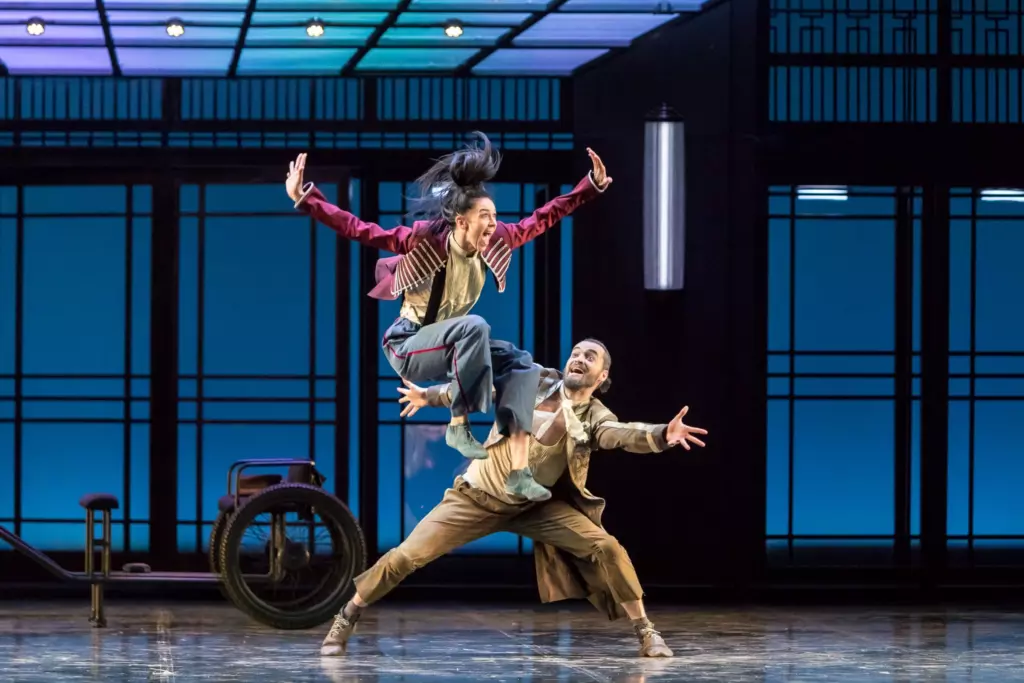
The Pygmalion Effect is Boris Eifman’s first experience in recent years of turning to the comedy (or, more precisely, tragicomedy) genre, of which the choreographer is a recognized master.
Continuing to find inspiration in contact with the world cultural heritage, Eifman offers the audience a ballet interpretation of the archetypal story of a sculptor who fell in love with a statue of a beautiful girl he created. The role of the violent creator in the dramatic construction of the play is assigned to a successful ballroom dancer, who decides to «sculpt» a virtuoso artist from an awkward representative of the urban lower classes. The inner and outer transformation of the heroine takes place to the music of Johann Strauss, the son, and the choreographer is working with the works of the Waltz King for the first time in his busy creative career.
An indefatigable researcher of the soul, Boris Eifman learned the rationale for the name of the new ballet in works on psychology, where the concept of «Pygmalion effect» means the phenomenon of the influence of expectations on reality. So, a person perceived by others as talented will feel confident in himself and achieve success.
The amazing plasticity of a personality capable of changing unpredictably in accordance with attitudes and dreams finds an exhaustive artistic and philosophical disclosure in Eifman’s play.
